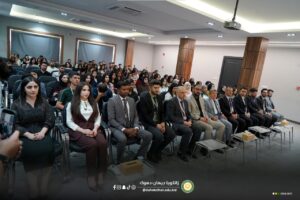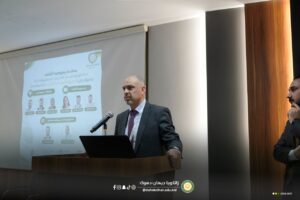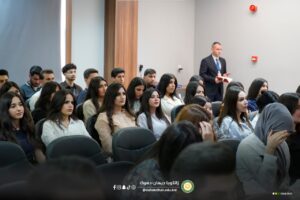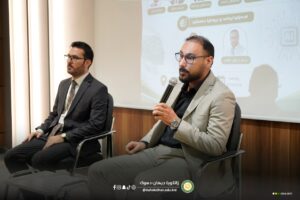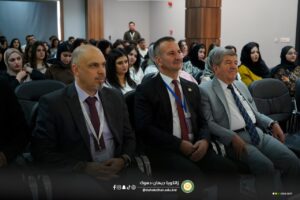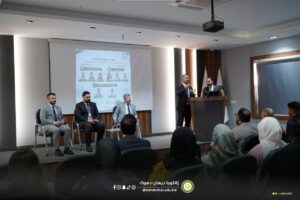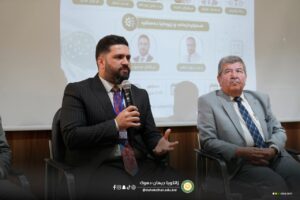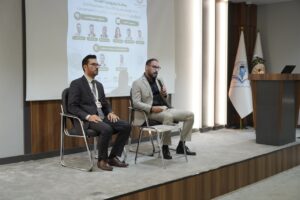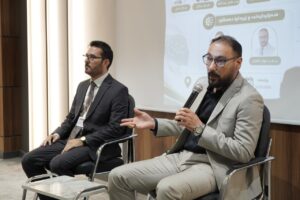
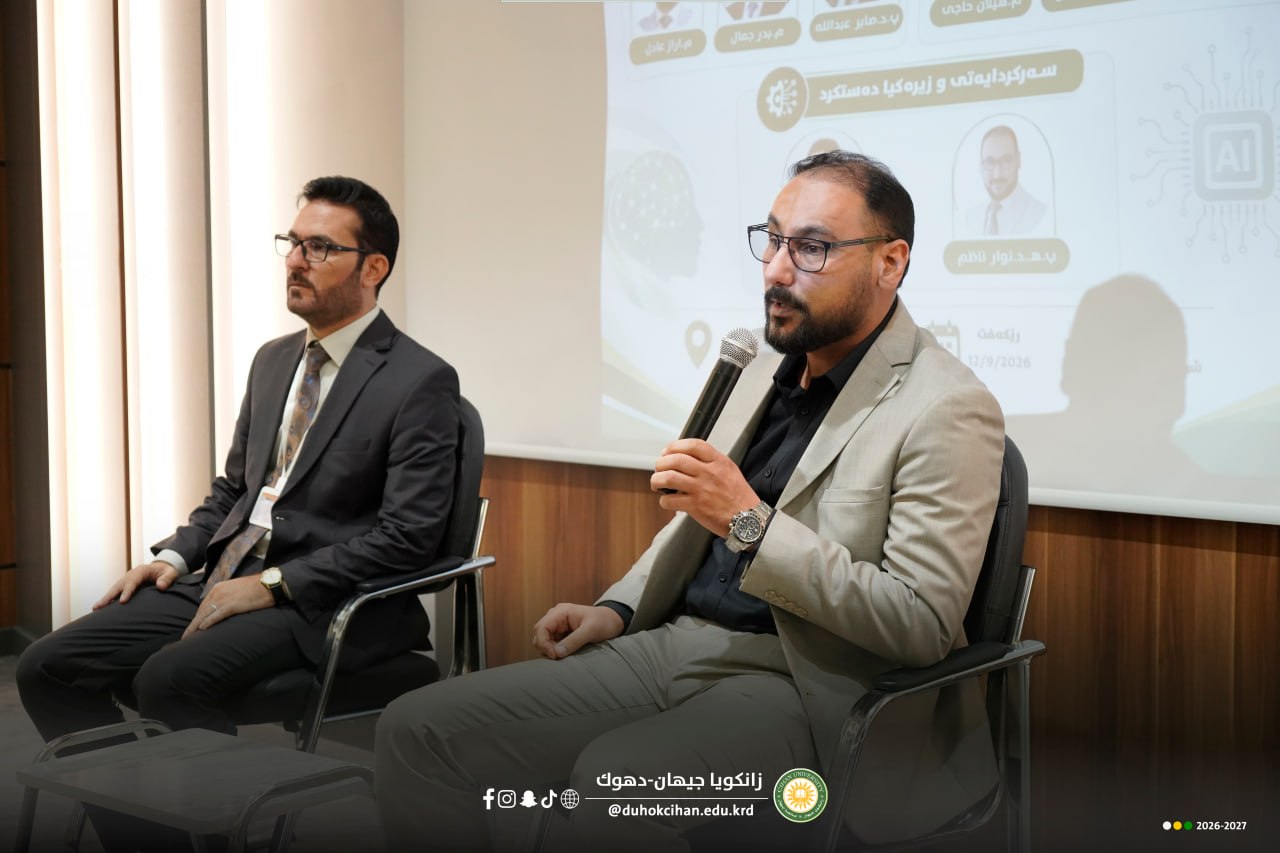
Duhok – September 12, 2026: The Department of Education at Cihan University–Duhok organized an academic seminar on Saturday, September 12, 2026, for second-year students to introduce them to the academic and professional opportunities offered by the department’s two main specializations: English Language and Psychology.
The seminar was held as part of the Department’s efforts to support students in making informed decisions regarding their future academic specialization. Under the Department’s academic structure, students currently enrolled in the second year are expected to select their specialization when they progress to the third year, choosing between the English Language and Psychology tracks.
The event was attended by the President of Cihan University–Duhok, Prof. Dr. Zeravan Abdulmuhsen Asaad, who addressed the students and emphasized the importance of making thoughtful and well-informed academic choices. In his remarks, the University President encouraged students to consider their individual interests, abilities, academic strengths, and long-term professional aspirations when selecting their specialization.
Prof. Dr. Asaad also highlighted the importance of university education in preparing students not only for academic achievement but also for the demands of the labor market and the rapidly changing professional environment. He encouraged students to make the most of their university experience, develop their skills, and approach their future careers with confidence and responsibility.
The seminar brought together academic staff from both specializations, providing students with the opportunity to gain a clearer understanding of the academic nature, career prospects, and future opportunities associated with each field.
Faculty members representing the English Language specialization discussed the significance of English language studies in today’s increasingly interconnected world. They highlighted the growing demand for English language proficiency across education, translation, communication, business, tourism, media, international organizations, and other professional sectors. The students were also introduced to the skills and competencies they can develop through the specialization and how these skills can contribute to their future career opportunities.
The Psychology specialization was also presented by members of the Department’s academic staff, who explained the importance of psychology in understanding human behavior, mental processes, interpersonal relationships, and social interaction. The discussion addressed the potential relevance of psychological knowledge in educational institutions, social and community settings, human resources, counseling-related fields, research, and other areas in which an understanding of human behavior is increasingly valuable.
The academic staff from both specializations also discussed the future development of the labor market and the importance of acquiring transferable skills alongside academic knowledge. Students were encouraged to consider not only the immediate academic requirements of each specialization but also the broader opportunities that each field may provide in their future professional lives.
The seminar provided an interactive platform for students to ask questions and engage directly with faculty members from both specializations. This allowed them to obtain practical information and clarification before making their specialization choice.
The event also emphasized that choosing a specialization is an important stage in a student’s academic journey, as it represents the beginning of a more focused educational pathway and can play a significant role in shaping future career goals.
Through organizing such academic guidance activities, the Department of Education at Cihan University–Duhok continues to support its students in making informed academic decisions and strengthening the connection between university education, students’ interests and abilities, and the requirements of the future labor market.
The seminar concluded with an emphasis on the importance of careful planning, continuous learning, and active engagement with academic opportunities as students prepare to enter the next stage of their university education.